Join us in Toronto March 6
EvolveDigital is a summit for digital innovators: developers, designers, marketers, and strategists. Whether you work with Drupal, WordPress, other open-source platforms, or in sectors like education, government, or healthcare, this event is for you. We focus on digital strategy, AI, and accessibility to drive collaboration and innovation.


Past participating organizations


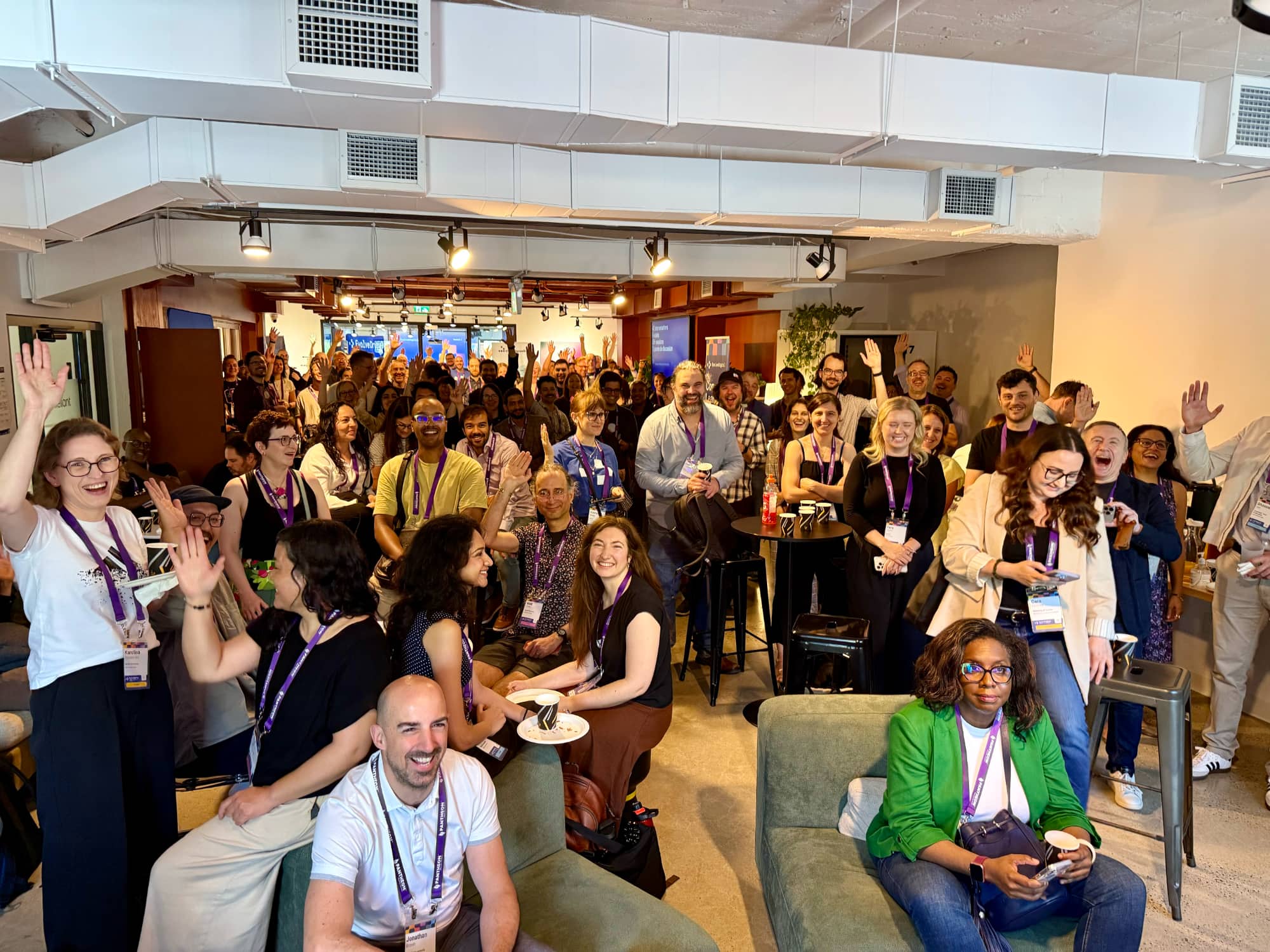
What to expect at EvolveDigital
Quality networking
Connect with industry leaders from higher education, non-profit, and government organizations to exchange ideas and build valuable relationships.

Inspiring sessions
Learn from +20 sessions on digital strategy, marketing, design, and technology that will fuel your creativity and drive your digital projects forward.

Insightful panels
Expert panels create space for meaningful conversation among experienced voices from across the industry, offering insight grounded in real-world practice.
AGENDA
Sessions
Below are the first accepted sessions. More sessions will be added gradually. In total you can expect more than 25 sessions including panels.
.png)
Suzanne Dergacheva
Co-founder
Evolving Web
Suzanne is the co-founder of Evolving Web, a digital agency that helps organizations that make a big impact in the world. She helps translate institutional goals and user needs into a tangible digital strategy, often bridging the gap between technology and user experience design. She runs trainings and strategic workshops and has collaborated with teams at Georgia Tech, Princeton University, McGill University and the University of Waterloo.

Martin Anderson-Clutz
Principal Solutions Engineer
Acquia
Martin Anderson-Clutz is a Drupal expert based in London, Ontario. A Pricipal Solutions Engineer at Acquia, he has a proven ability to understand the nuances of complex technologies and communicate them to business stakeholders. He has spoken internationally at technology conferences and is a regular on the Talking Drupal podcast.

Joyce Peralta
Communications & Marketing Manager
McGill University
Joyce has been building websites and digital communities for over 20 years, including 15 years of experience in higher education. She is currently Associate Director, Digital Communications at McGill University in Montreal, Canada. Her prior experience includes positions at the University of Victoria, Western University, and Kings University College. Joyce is an award-winning international speaker who has presented at Button, ContentED, CMS Connect, Confoo, Digital Collegium, and #PSEWeb. Her topics of focus include web standards, governance, and user experience.

Emma Nguyen
Executive Director, Digital Marketing and Communications
University of Toronto

Gary Bhanot
Director, Digital Infrastructure
University of Toronto
Emma Nguyen, Executive Director, Digital Marketing and Communications, University of Toronto
With over 15 years of expertise in digital transformation, fundraising, and brand strategy, Emma drives initiatives that integrate digital channels to enhance alumni engagement and philanthropic impact. She leads the Brand Hub digital team to advance the university’s global reputation and digital thumbprint.
Gary Bhanot, Director, Digital Infrastructure, University of Toronto
With 12+ years driving technology, data, and enterprise solutions in the non-profit sector, Gary optimizes fundraising performance and operational efficiency. He has worked with 75+ North American non-profits, leading cross-functional teams and complex integrations, and also teaches programming at Humber College—bringing a practical, people-first approach to innovation and donor engagement.

Charlotte Miller
Assistant Registrar, Strategic Communications and Marketing
Office of the Registrar, McMaster University

Leanne Ruiz
Associate Director, Business Transformation
Office of the Registrar, McMaster University
Charlotte Miller, Assistant Registrar, Strategic Communications and Marketing, McMaster University
Charlotte specializes in helping teams work smarter through digital transformation, process improvement and collaborative problem-solving. She brings a practical, people-centered approach to leveraging technology to improve service delivery and organizational effectiveness.
Leanne Ruiz, Associaate Director of Business Transformation, Office of the Registrar, McMaster University
Leanne Ruiz leads cross‑functional initiatives that modernize processes, improve service delivery, and support organizational change. She specializes in bridging strategy, systems, and people to create scalable, human‑centered solutions that enhance both staff workflows and student experiences.
The Unified Estate: Orchestrating design, data, and strategy at Empire Life
.png)
Luke Woolliscroft
Director, IT, Digital Customer & Advisor Journeys
Empire Life
Luke Woolliscroft is Director, IT, Digital Customer & Advisor Journeys for The Empire Life Insurance Company, a Canadian insurance and investments company.

Niki Ramesh
Senior Manager, Product Accessibility
Canadian Broadcasting Corporation (CBC)

Pina D’Intino
CEO, Accessibility Strategy Adviser
Aequum Global Access Inc

Juan Olarte
CEO
Digita11y Accessible Inc./ A11YVERSE
.png)
Fran Wyllie
Accessibility Specialist, Dev Manager
Northern
What does it actually take to make digital accessibility work — and keep it working?
This panel brings together three leaders with deep roots in accessibility strategy, product development, and inclusive design to tackle that question head-on. They'll share real-world insights on training teams to understand their role in accessibility, setting and maintaining standards, integrating AI responsibly, and centering the people who matter most — users with disabilities. From navigating new tools and technologies to building organizational buy-in that lasts, expect an honest conversation about the wins, the roadblocks, and where the industry needs to go next.
Niki Ramesh, Senior Manager, Product Accessibility, CBC
Niki Ramesh leads product accessibility at CBC, Canada’s public broadcaster and media company. She collaborates with research and product development teams to create innovative accessibility experiences, driven by a deep understanding of the disabled community's needs. A Certified Professional in Web Accessibility (CPWA), Niki also contributes to national accessibility standards as a technical committee member with Accessibility Standards Canada.
Pina D'Intino, Accessibility Strategy Adviser and CEO, Aequum
For more than 25 years, Pina D'Intino has been a catalyst for change working with large public and private sector organizations helping them to develop, implement and measure their accessibility progress. An evangelist for role-based training, from leadership to testers and support agents, she ensures that everyone understand their responsibilities towards greater accessibility. Pina is also the project manager for the Business Accessibility Program at IAAP.
Juan Olarte, CEO, Digita11y Accessible Inc./ A11YVERSE
Juan Olarte is a digital accessibility leader and founder of Digita11y Accessible and A11YVERSE. With over 25 years of experience and lived experience with visual impairment, he helps organizations embed accessibility into digital products through practical strategy and responsible use of AI, focused on real and measurable impact.
MC:
Fran Wyllie, Accessibility Specialist, Dev Manager, Northern
Fran is an IAAP-certified Web Accessibility Specialist and a passionate leader dedicated to advancing inclusive digital experiences. Currently, Fran leads a team of Drupal developers at Northern and spearheads the implementation of accessibility practices company-wide. With six years of expertise creating solutions that not only meet but exceed WCAG standards, Fran advocates for accessible development that ensures equitable, high-quality user experiences for all.
The Design System Mindset: Principles, Patterns, and Real-World Lessons
.png)
Guy Segal
Director, Design and Design Systems
Thomson Reuters

Irina Stoica
Senior UX Designer
Bell

Andrea Ong
Senior Manager, Design Systems
RBC

David Cox
Senior Product Designer, Design Systems Accessibility
Lyft
Design systems aren't just component libraries - they're foundational infrastructure that can make or break how teams work. This panel brings together practitioners to discuss the principles that underpin successful design systems at any scale. From token architecture and multi-brand strategies to accessibility, adoption, and navigating the AI era, we'll explore the lessons learned from building systems in the real world. Perfect for anyone curious about design systems, actively building one, or trying to scale what they've started.
Irina Stoica
Irina is a designer with over 10 years of experience working across digital products and platforms. Over the past 4 years, her work has focused on design systems, with a strong emphasis on token architecture and building scalable foundations for multi-brand, multi-platform products. She specializes in creating systems that balance creativity, flexibility, and real-world development constraints.
Guy Segal
Guy is a design leader with over 20 years of experience in the tech industry, specializing in UX, product design, and DesignOps. His expertise in design leadership and people management has allowed him to foster innovation and collaboration within design teams, establishing robust design practices and leading them to success. In recent years, Guy has focused on design systems, building and growing teams around the practice, and launching systems that optimize efficiency and enhance user experiences.
David Cox, Senior Product Designer, Design Systems Accessibility, Lyft
David Cox is a digital accessibility specialist with 6+ years of design systems experience. He is currently at Lyft, working on design system and product accessibility through practical strategy, collaboration, and hard work. Previously, David worked on the GOV.UK Design System team’s first accessibility strategy and was a founding member of the Ontario Design System team.
Andrea Ong
With over 15 years' experience, Andrea design practice is focused on untangling complexity and ambiguity to find a path forward that balances the needs of humans and business at the intersection of ethics, systems, and technology. She currently leads the RIG Mobile design system at RBC, supporting the work of delivering banking app experiences for millions of Canadians. Andrea is also a watercolour artist, a dinghy sailor, an underwater photographer, and guardian to two fluffy cats.
Why the "Analog" University Matters: Designing digital transformation around relationships, not resistance
.png)
Erin Aspenlieder
Director, Office of Teaching and Learning
University of Guelph
Erin Aspenlieder is the Director of the Office of Teaching and Learning at the University of Guelph, where she leads institutional initiatives around teaching innovation and supports educators and programs in teaching practice. She also runs erinai.ca, a consulting practice that helps organizations develop human-centered approaches to AI adoption through what she calls "relational AI" — meeting people in their values and relationships, not just their technical capacity. With 15 years in educational development, Erin works daily with educators who remind her that the best technology serves human connection, not the other way around.
Achieving brand visibility in the era of AI-search
.png)
Justin Cook
President of Internet Marketing & Development
9thCO Inc.
Justin engages international audiences with an easygoing style and sharp digital intellect. Through his presentations and work, he entertains, informs, and sparks ideas that inspire action and drive impressive online results.

Jesse Dyck
Solutions Architect
Evolving Web
600+ subsites. 200 plugins. 50 themes. A WordPress Multisite network frozen in 2017. A mandatory jump to PHP 8.
This talk is a survival guide for upgrading legacy WordPress at scale. We’ll skip the basics and dive into the deep end of a major upgrade. You will learn how to audit vast codebases and automate compatibility checks for hundreds of plugins. We’ll talk about the importance of developing a testing plan, with tools for automation but also including manual and user acceptance testing (UAT). Finally, some unexpected issues to expect, and how to manage the deployment of this major change.
Jesse Dyck is the WordPress Practice Lead and Solutions Architect at Evolving Web. He loves the block editor and block themes, especially in higher ed and enterprise.
Creating impact while mitigating risk: The strategic value of user research

Adie Margineanu
User Experience Lead
University of Toronto Scarborough
Over a 10-month period, U of T Scarborough’s admission website redesign incorporated a disciplined, multi-phase user research program that garnered qualitative and quantitative feedback from a total of 194 prospective student users. With a modest investment, one dedicated user research lead, and a fifth of the total project time, the research directly enabled a high performing digital experience that is measurably advancing recruitment goals. In this talk, we will break down the studies we did, why we did them, how they impacted our design decisions, and how to advocate for them to your leadership so they understand their tangible value.
Adie has been working in the user experience field for over 13 years, with roles across the public and private sector, in house and agency-side. She cares about making services and products accessible and easy to use, and she’s been enjoying working on several projects with the web team at U of T Scarborough for the past three years. In her spare time, she’s an avid reader and knitter.
Bringing AI to the website: Digital assistants and personalization

Nicole Rogers
Co-founder
ai12z
Your website isn’t dead, but it’s no longer enough. As AI reshapes customer expectations, static digital experiences must evolve.
AI-powered digital assistants, embedded directly on websites, personalize interactions by answering questions and guiding visitors to take action. In this session, we’ll explore how these assistants transform experiences, including the landing page itself, based on what people ask.
Nicole is a technology professional with a background spanning cloud, content management and spatial data. Her experience includes establishing and scaling programs from their start to success, steering team operations, driving go-to-market initiatives, and enhancing partner and analyst relations to boost solution visibility and drive revenue. Nicole has contributed her expertise to companies which include Google, Box, WeWork, Matterport, and Ektron (now known as Optimizely).

Sean Stanleigh
Director of Globe Content Studio
The Globe and Mail
Sean Stanleigh is Director of Globe Content Studio, the content-marketing division of The Globe and Mail. His team blends audience data with journalistic intuition and experience to craft great storytelling on behalf of brands, positioning them as thought leaders with influential audiences across multiple platforms. Sean's background is rooted in journalism, and he has held a number of senior editing roles at The Globe and the Toronto Star in disciplines that include national, foreign and local news, small business, and entertainment. He has a keen interest in entrepreneurship as former co-founder of a networking events business, he was co-chair of The Globe’s innovation lab and host of the podcast Industry Interrupted, and he participates as a judge in business competitions. Sean regularly appears at events as a host, speaker and moderator.

Dmitry Mayorov
Front-End Engineer
Fueled
Dmitry is a front-end engineer focused on design systems and enterprise-scale content platforms. He partners with design and content teams to build token-driven foundations, component libraries, and editor guardrails. His work helps teams move faster by reducing options and making consistency the default.

Aidan Foster
Strategy Lead
Foster Interactive
Aidan is UX Manager for the Drupal AI project, leads the AI/Drupal Toronto Meetup, and founded Foster Interactive. He brings 18 years of experience across UX design, strategy, and technical execution to build AI-enabled websites grounded in real human insight.

Preston So
Chief Commercial Officer
React Bricks
Whether you're a developer, a designer, or a content manager, the limits of generative AI tools in CMSs and DXPs make them feel like a piecemeal solution to too many problem spaces. Sure, AI features can now generate text, design assets, and even page layouts on your team's behalf. But these are often missing a holistic perspective across every element and every stakeholder in your organization's digital experiences. We get frustrated having to repeat context for each new prompt.
In recent years, visual headless CMSs have emerged as the preferred approach for developers tired of antiquated paradigms and content editors bewildered by headless complexity. In this session, we'll examine the past, present, and future of visual headless CMS as a category, evaluate why many platforms' AI features still fall short in making all our lives easier, and explore how AI can and should fill in the gaps for your organization's cross-functional efficiencies and bottom line.
Preston is a globally recognized authority on the intersections of content, design, and code and a technology executive leader, with over 22 years building and selling software and 11 years overseeing multinationally distributed cross-functional organizations. He is Chief Commercial Officer at React Bricks and the author of Immersive Content and Usability (2023), Gatsby: The Definitive Guide (2021), Voice Content and Usability (2021), and Decoupled Drupal in Practice (2018), each considered the authoritative title in its subject area.
Named “the smartest guy in the field” by Content Strategy for Mobile author Karen McGrane, a top influencer in Onalytica’s “Who’s Who in Digital Experience”, and “probably the smartest person working in this industry right now” by Web Content Management author Deane Barker, Preston is an editor at A List Apart and was a top-read columnist at CMSWire and published in Smashing Magazine. Preston is a frequent speaker with 19 years of multilingual keynotes and engagements spanning over 50 conferences, including SXSW Interactive, An Event Apart, and Button. He is based in Chicago, where he can often be found immersing himself in endangered or underserved languages.
Do people still read emails? Yes. Just not the way you think.

Dayana Kibilds
VP, Strategy
Ologie
In this session, we will break down how people actually read emails today and what that means for how you write them. You will learn how to write subject lines that get opened, structure sentences for skimming, and use formatting and white space to guide attention instead of fighting it. We will also cover where links and buttons actually get clicked, common reading patterns you can design for, and a quick gut-check you can use to see if your email will get read before you hit send.
This session is useful for anyone who sends email, whether it is a mass campaign or a quick internal note.
Day is vice president of strategy at Ologie, the agency for brands on a mission. For nearly two decades years, she has led award-winning work with institutions around the world. An international keynote speaker and bestselling author, Day is known for taking complex ideas and making them feel clear, practical, and possible.

Anton Morrison
Co-Founder
Mogul
What if your AI assistant could research, strategise, design, code, test, and deliver — while remembering your entire business?
In this live demo, I'll show "Artificial Brain," a system I built in Claude Code that runs my consultancy end-to-end: from client research and architecture design through autonomous code sprints to support ticket triage and daily accountability. No SaaS — just markdown, skills, and an AI that knows everything.
Anton Morrison is Co-Founder & CTO of Mogul, where he buildsAI-powered learning platforms for global brands including VisitCalifornia, I Prefer Hotels, and oneworld Alliance. He uses ClaudeCode to research, design, code, test, and deliver — running hisentire consultancy through an AI-native system called ArtificialBrain. Based in Montreal, originally from the UK.
The stakeholder maze: collaboration lessons from higher education digital projects

Ian Barcarse
Director, Marketing & Brand Strategy
Sheridan College

Jessie Johnston
Associate PMO
Evolving Web
Digital projects in higher education rarely involve just one team. These projects usually sit at the intersection of brand, digital experience, communications, enrollment, IT, academia, and leadership, each with distinct priorities and definitions of success.
In this fireside chat, Nicole Woodall, Director of Digital Strategy at Sheridan College, and Ian Barcarse, Director of Marketing & Brand Strategy at Sheridan College, will share an honest look at what it takes to collaborate in a complex higher education environment. They will discuss how stakeholder management shapes decision-making, how teams navigate competing priorities, and how complexity can become a strength.This session is for anyone looking to create alignment and keep things moving in organizations with many teams.
Ian Barcase, Director, Marketing & Brand Strategy, Sheridan College
Ian Barcarse is a data-driven, people-focused marketing leader with 15+ years of experience in business consulting, digital advertising, and higher education. He specializes in global brand strategy, integrated marketing campaigns, and leading cross-functional teams to deliver high-impact results. Ian is Director, Marketing & Brand Strategy at Sheridan College and holds a Master’s in Professional Communication.
Jessie Johnston, Associate PMO, Evolving Web
With 20+ years at the intersection of technology and education, Jessie Johnston is a project management consultant working with Evolving Web as an Associate PMO. She brings her experience across education (including several years helping lead #PSEWeb) and agencies to deliver user-centered website initiatives—from strategy through launch, training, and documentation.
.png)
Andrew Kumar
Global VP, Technology & Ecosystem
Uniform
AI is reshaping digital experience platforms, but much of what’s marketed today won’t survive real-world scale. This session cuts through the noise to show what AI is actually changing in 2026, and what’s mostly hype. Most teams don’t fail at AI because of the technology, but because they apply it in the wrong places. You’ll leave knowing where AI creates real leverage, and where to confidently say no.
Andrew Kumar builds AI-powered platforms and ecosystems at Uniform. He operates at the intersection of architecture, product, and field engineering, helping teams make hard platform decisions with clarity and control. Andrew speaks on AI, platform strategy, and why restraint is often the most powerful advantage.
Setting the tone: Building a shared vocabulary in design

Chris Mantil
Creative Director
Chris Mantil Design
Establishing the tone and style of a brand's visual identity can often be challenging. Personal taste, visual literacy, and varied definitions of aesthetics can make it difficult to pinpoint a direction or strategy. But by front-loading the work with thoughtful conversation, and simple visual aids, a shared vocabulary can be built. This shared vocabulary helps to bridge visual literacy, contextualize and guide early creative decision making, while also reinforcing and empowering the visual identity into the future.
Beyond the website: Preparing your content, your team, and your strategy for the future of discoverability

Brian Piper
Founder
AIreFlow Solutions
The search landscape is changing, and there are obvious signs of where it's going. Your future audiences may not visit your website. Or scroll your social feed. They’ll ask an agent to find the answer, and your content will either show up in that response or it won’t exist.
The shift from B2B to A2A (agent-to-agent) isn’t a distant future. It’s the logical next step of a transition already underway, from SEO to generative search, from destination websites to information ecosystems, from content that ranks to content that gets retrieved, parsed, and delivered by machines on behalf of humans.
This changes what your website needs to be, what your social strategy is for, and how your comms and PR actually reach people.
But here’s the counterintuitive part: the best way to prepare for a machine-driven future is to make your content more human, not less. Long-form, human-first content built around strategic pillars and real audience value is the raw material from which everything else gets built.
When it’s properly structured, tagged, clustered, and informed by data, it can be repurposed into every format your audience prefers and surfaced by every system that comes looking.
Take a glimpse into the content landscape that’s emerging and the Human-in-the-Loop workflow that keeps your team’s expertise, judgment, and storytelling at the center of it.
AI can do a lot of things. It’s up to us to decide what it should do.
Brian Piper is an award-winning author, international keynote speaker, and consultant who has been optimizing digital content since 1996. He co-authored the second edition of Epic Content Marketing with Joe Pulizzi, wrote Epic Content Marketing for Higher Education, and hosts the AI for U podcast.He helps higher education and mission-driven organizations collaborate with AI to make their work smarter, faster, and more human, bridging the gap between innovation and impact.
Loblaw Digital’s federated design system: practical advice for building a system without a team

James Harrison
Staff Product Designer
Loblaw Digital
Design Systems work doesn’t always happen under ideal circumstances. At Loblaw Digital, the desire for a scalable system had to be balanced with the rapid growth of our platform. Now into year four, Staff Designer James Harrison has gained a lot of perspective and a few grey hairs. This session discusses how we built and scaled the system, how we’ve kept it alive without a dedicated team, and what’s required to keep things running into an increasingly AI-driven future.
James is a Staff Product Designer at Loblaw Digital, where he leads the Helios design system. With over a decade of experience in the design space, James has designed everything from independent magazines to AI-powered conversational interfaces. He occasionally writes (and speaks) about systems, UX, and design, and writes a weekly newsletter dedicated to his endless font of interesting facts, called Know-it-all. James lives in Toronto and enjoys tennis, trivia, and cats.
Our sponsors
About Evolving Web
EvolveDigital is organized by the team at Evolving Web. Our dedicated team of digital experts, event planners, and community enthusiasts work hard to ensure that every event is a success and brings immense value to attendees.

Connect
Learn
Inspire


.png)